Can fiber optic cable be plastic?
Aug 08, 2025
Yes, fiber optic cables can be made of plastic, but they differ significantly from traditional glass fibers in terms of performance and applications. Here's a detailed comparison:
Plastic Optical Fiber (POF) vs. Glass Optical Fiber
| Feature | Plastic Optical Fiber (POF) | Glass Optical Fiber |
|---|---|---|
| Core Material | Polymethyl methacrylate (PMMA) or similar plastics | Ultra-pure silica glass |
| Diameter | Large core (~0.5–1.0 mm) | Small core (9–62.5 µm for multimode, ~8–10 µm for single-mode) |
| Attenuation (Loss) | High (~100–200 dB/km) | Very low (0.2–3 dB/km) |
| Bandwidth | Low (~10s of MHz over short distances) | High (GHz over km for glass) |
| Flexibility | Very flexible, crush-resistant | Fragile (needs protective coatings) |
| Cost | Cheap (connectors and cables) | Expensive (precision manufacturing) |
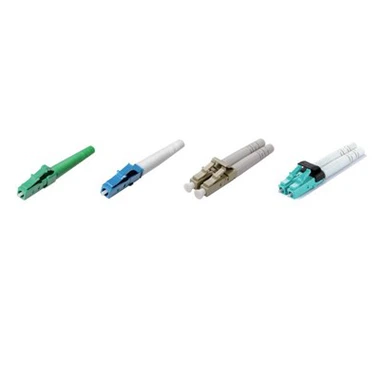
| Connectors | Simple (e.g., SMA, ST, proprietary) | LC, SC, MPO, etc. (precision ferrules) |
| Typical Uses | Short-range audio, automotive, home networking | Telecom, data centers, long-haul networks |
Where is Plastic Optical Fiber (POF) Used?
Automotive Networks
Used in cars (MOST, Media Oriented Systems Transport) for infotainment systems due to EMI resistance and durability.
Home Networking
Short-distance audio/video transmission (e.g., TOSLINK for digital audio).
Industrial Sensors
Harsh environments where flexibility and shock resistance matter more than speed.
Medical Devices
Endoscopy lighting (low-cost disposable fibers).
Limitations of POF
Short Range: Limited to <100 meters due to high attenuation.
Low Speed: Not suitable for high-speed data (e.g., 10G+ networks).
Temperature Sensitivity: Degrades faster than glass in extreme heat.
When to Choose POF Over Glass?
Budget constraints: POF is cheaper for short links.
Durability needed: Bending/crushing risks (e.g., robotics, cars).
Simple installation: No polishing/epoxy required (larger tolerances).
Key Takeaway
POF is not a replacement for glass fiber in high-performance networks but fills niche roles where cost, flexibility, and ease of use outweigh the need for speed/distance.
For long-haul or data-center use, glass fiber (single-mode/multimode) remains the standard.