What is the best connector for fiber optic cable?
Aug 08, 2025
1. LC (Lucent Connector)
Best For:
High-density environments (data centers, telecom)
Single-mode and multimode applications
SFP/SFP+/QSFP transceivers
Key Features:
Size: Small form factor (1.25mm ferrule)
Insertion Loss: ~0.1–0.3 dB (low loss)
Durability: Push-pull latch mechanism
Polishing Types: UPC (blue), APC (green, angled for reduced reflections)
Pros:
Compact, ideal for tight spaces (e.g., patch panels)
Low insertion loss (good for high-speed networks)
Widely used in modern fiber systems
Cons:
Slightly more expensive than SC
Requires careful handling due to small size
Common Applications:
10G/25G/100G Ethernet
Fiber-to-the-Home (FTTH)
Enterprise networks
2. SC (Subscriber Connector)
Best For:
General-purpose fiber networks
CATV, telecom, and enterprise LANs
Key Features:
Size: Larger than LC (2.5mm ferrule)
Insertion Loss: ~0.2–0.5 dB
Durability: Push-pull snap-in design
Polishing: Mostly UPC, some APC
Pros:
Simple and reliable
Lower cost than LC
Good for both single-mode and multimode
Cons:
Bulkier than LC (not ideal for high-density setups)
Common Applications:
GPON (Fiber internet)
Datacom and telecom backbone
Older enterprise networks
3. ST (Straight Tip)
Best For:
Industrial, military, and legacy multimode networks
Key Features:
Size: 2.5mm ferrule (similar to SC)
Insertion Loss: ~0.3–0.5 dB
Durability: Bayonet-style twist-lock
Polishing: Mostly UPC
Pros:
Secure locking (good for vibration-prone areas)
Rugged design
Cons:
Obsolete in modern high-speed networks
Not suitable for single-mode high-performance use
Common Applications:
Older LANs (OM1/OM2 multimode)
Industrial fiber links
4. MTP/MPO (Multi-Fiber Push-On)
Best For:
High-speed data centers (40G/100G/400G)
Parallel optics (multi-fiber trunking)
Key Features:
Size: Large, multi-fiber (12/24/48 fibers)
Insertion Loss: ~0.3–0.7 dB
Durability: Push-pull with guide pins
Polishing: Mostly UPC
Pros:
Supports high bandwidth (400G+)
Reduces cable clutter in data centers
Cons:
Expensive and complex to terminate
Requires precise alignment
Common Applications:
Cloud data centers
Spine-leaf network architecture
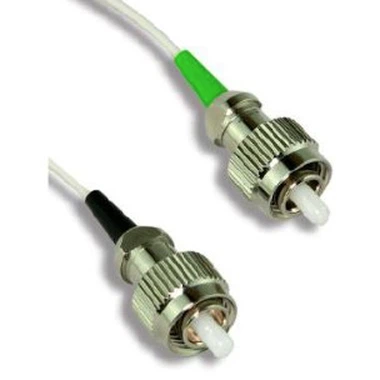
5. FC (Ferrule Connector)
Best For:
High-vibration environments (industrial, test labs)
Single-mode precision applications
Key Features:
Size: 2.5mm ferrule
Insertion Loss: ~0.2–0.5 dB
Durability: Threaded coupling (secure)
Polishing: Mostly APC for low reflections
Pros:
Extremely stable (good for OTDR testing)
Low back reflection (APC version)
Cons:
Not used in modern data centers
Slow to connect/disconnect
Common Applications:
Fiber optic test equipment
Military and aerospace
Comparison Table (LC vs. SC vs. ST vs. MTP vs. FC)
| Connector | Ferrule Size | Insertion Loss | Durability | Best Use Case |
|---|---|---|---|---|
| LC | 1.25mm | 0.1–0.3 dB | Push-pull | Data centers, SFP+ |
| SC | 2.5mm | 0.2–0.5 dB | Push-pull | Telecom, FTTH |
| ST | 2.5mm | 0.3–0.5 dB | Bayonet-lock | Legacy multimode |
| MTP | Multi-fiber | 0.3–0.7 dB | Push-pull | 100G/400G networks |
| FC | 2.5mm | 0.2–0.5 dB | Threaded | Test equipment |
Final Recommendations:
Choose Based on Your Application:
Data Center (High Density, 10G-400G): LC (single-fiber) or MTP/MPO (multi-fiber)
Telecom/FTTH: SC (cost-effective) or LC (future-proof)
Industrial/Legacy: ST (multimode) or FC (single-mode)
Testing/Labs: FC (APC) for precision