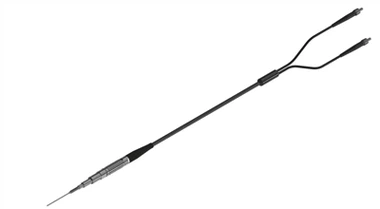
What is Single Mode WDM?
Jul 22, 2025
Single Mode Wavelength Division Multiplexing (WDM) is a technology that enables multiple optical signals, each carried on a distinct wavelength of light, to be transmitted simultaneously over a single strand of single-mode optical fiber. This significantly multiplies the fiber's transmission capacity without requiring additional physical fibers.
How Single Mode WDM Works
Principle of Wavelength Multiplexing:
Different wavelengths (colors) of light act as independent communication channels within the fiber.
At the transmitting end, a WDM multiplexer (Mux) combines signals from different sources (operating at specific wavelengths like 1310 nm, 1490 nm, 1550 nm, or C-band wavelengths for DWDM) onto the single fiber.
At the receiving end, a WDM demultiplexer (Demux) separates the combined wavelengths, directing each one to its respective receiver where the optical signal is converted back to electrical form for processing.
Single-Mode Fiber (SMF) Characteristics:
SMF has a small core diameter (~9 µm), allowing only the fundamental mode of light to propagate. This eliminates modal dispersion, enabling high-speed, long-distance transmission.
SMF exhibits low attenuation, particularly in specific "windows" like the 1310 nm region and the 1550 nm region (C-band: ~1530-1565 nm), where attenuation can be as low as 0.2 dB/km. This low loss is essential for transmitting multiple signals over long distances.
Types of Single Mode WDM Components
Fused Biconic Taper (FBT) WDMs:
Manufactured by fusing and tapering two or more SMFs together, creating a coupling region where light transfers between fibers based on wavelength.
Advantages: Low insertion loss, relatively simple manufacturing. Common in applications like combining pump and signal wavelengths in fiber amplifiers/lasers (e.g., 980/1550 nm).
Thin-Film Filter (TFF) WDMs:
Use precisely engineered layers of dielectric materials deposited on a substrate. These layers selectively reflect or transmit specific wavelengths.
Advantages: High wavelength selectivity and isolation, excellent stability. Essential for dense channel applications like Dense WDM (DWDM) where channels are closely spaced (e.g., 0.8 nm, 0.4 nm). Offer flat-top or Gaussian passband shapes.
Applications of Single Mode WDM
Telecommunications:
Capacity Expansion: The primary application. WDM multiplies the capacity of existing fiber infrastructure, crucial for backbone networks (long-haul, submarine cables), Metropolitan Area Networks (MANs), and increasingly in access networks (FTTx). Instead of one signal per fiber, dozens or hundreds (with DWDM) can be carried.
Network Efficiency: Enables bidirectional communication over a single fiber (e.g., 1310nm upstream / 1490nm/1550nm downstream in PON). Reduces the need for deploying new fiber cables.
Fiber-Optic Sensing:
Allows multiple sensors operating at different wavelengths to share a single fiber. Each sensor modulates its specific wavelength signal, which is then multiplexed onto the fiber and demultiplexed at a central monitoring point. This enables distributed monitoring of parameters like temperature, strain, or pressure.