Medical Fiber Probe Assemblies FAQs
Jul 10, 2025
1. What is a medical fiber probe assembly and what are its main components?
It is a fiber optic assembly designed for medical use, comprising an optical fiber (single or multimode), fiber coatings, connector interfaces, a specialized probe tip (lensed, cleaved, or diffused), and a biocompatible protective sheath with strain relief for safe insertion into or contact with the human body.
2. What fiber types are most commonly used?
Single-mode fibers for high-resolution imaging (e.g., OCT) or precise laser delivery.
Multimode fibers for illumination or lower-resolution sensing.
Fiber specifications (core/cladding size, numerical aperture) depend on the application wavelength and power.
3. How are probe tips designed and fabricated?
Tips may be:
Cleaved flat for direct light delivery or collection.
Polished with specific angles (e.g., APC) to reduce back reflection.
Micro-lensed using ball lenses or gradient-index (GRIN) lenses for focused beams.
Diffusers to spread light over a wider area (useful in photodynamic therapy).
Fabrication methods include precision polishing, laser micromachining, or adhesive bonding.
4. What materials are used for the outer sheath?
Biocompatible polymers like PTFE, silicone, polyurethane, or fluoropolymers. These materials are:
Sterilizable
Flexible yet durable
Non-toxic and non-irritating for patient contact
5. How is sterilization handled?
Common methods include:
Steam autoclaving (high temperature, pressure)
Ethylene oxide (ETO) gas (low temperature, chemical)
Gamma radiation (non-thermal)
Plasma sterilization (low temperature)
Materials and adhesives must be chosen to resist degradation from these processes.
6. Are medical fiber probes reusable or disposable?
Reusable probes are designed for repeated sterilization and durable construction.
Disposable probes minimize cross-contamination risk but must be cost-effective.
7. What connectors are standard in medical probes?
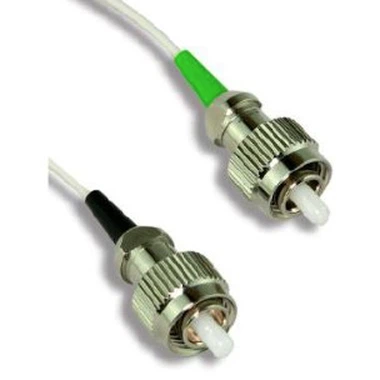
SMA 905/906: common for laser delivery due to durability and precision.
FC, LC: used where low insertion loss and repeatability are needed, such as imaging systems.
Custom miniature connectors: for specialized handheld or integrated devices.
8. What optical performance metrics are critical?
Insertion loss: should be minimal to ensure efficient light transmission.
Return loss: especially for imaging or laser therapy, to minimize back reflections that can affect image quality or damage lasers.
Beam profile and uniformity: important in therapies like PDT.
9. What mechanical considerations are important?
Bend radius: probes must be flexible but not exceed minimum bend radius to avoid fiber breakage.
Strain relief: incorporated to protect fiber at critical stress points.
Tensile strength: sufficient to withstand handling during use and sterilization.
10. How is the assembly process managed?
Precision fiber stripping and cleaving.
Probe tip fabrication and attachment.
Connectorization with medical-grade adhesives or mechanical fixtures.
Sheath application and strain relief installation.
Testing for optical and mechanical integrity.
11. What testing and quality control is performed?
Optical insertion and return loss measurement.
Endface inspection (microscopy) for defects.
Mechanical stress testing (bend, tension).
Sterilization validation (material stability, optical performance post-sterilization).
Biocompatibility testing of sheath materials.
12. What regulations govern medical fiber probes?
FDA approval or clearance (in the U.S.).
ISO 13485 quality management system for medical devices.
CE marking in Europe under Medical Device Regulation (MDR).
Biocompatibility testing per ISO 10993.
13. What are the most common clinical applications?
Endoscopy: illumination and imaging fiber bundles.
Laser surgery: precise light delivery probes.
Photodynamic therapy: light delivery to activate photosensitizers.
Optical coherence tomography: imaging with high resolution.
Fluorescence diagnostics: detection of cancer or metabolic changes.
Temperature and biochemical sensing: embedded fiber sensors.
14. What challenges exist in medical fiber probe design?
Balancing miniaturization with durability.
Ensuring optical performance despite mechanical flexing.
Selecting materials that survive sterilization without optical degradation.
Achieving biocompatibility while maintaining cost-effectiveness.
15. Can probes be customized for specific procedures?
Yes, manufacturers often tailor fiber types, probe tip optics, sheath materials, and connectors to meet the clinical needs of particular diagnostic or therapeutic applications.