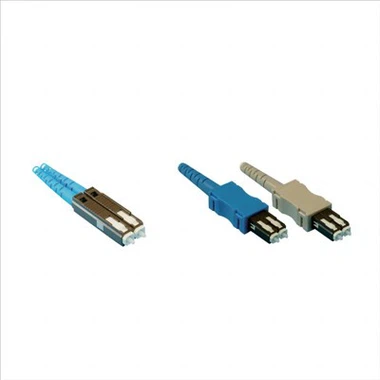
How Do You Choose Fiber Optic Cable Connectors?
May 14, 2025
Choosing the right fiber optic cable connectors is critical for ensuring optimal network performance, ease of installation, and long-term reliability. Below is a comprehensive, professional-level guide to selecting fiber optic connectors based on technical, environmental, and application-specific requirements.
1: Understand the Application Environment
A. Application Layer Use Case

Rule of Thumb:
Use APC-polished connectors in applications sensitive to back reflection, and UPC where reflection is less critical but insertion loss is still important.
2: Technical Selection Criteria
A. Fiber Type Compatibility
Single-Mode (OS1/OS2): 9/125 µm core - long distance, low loss.
Multi-Mode (OM1–OM5): 50/125 µm or 62.5/125 µm - short distance, lower cost.
Connectors must match the core diameter and numerical aperture of the fiber.
B. Connector Geometry and Polish

Never mix APC and UPC connectors - mechanical damage or signal loss will result.
C. Optical Performance Parameters

Ensure connector specs meet GR-326-CORE for mission-critical telecom systems.
D. Mechanical Interface and Form Factor

3: Connector Selection Workflow
Step-by-Step Process
Identify system requirements:
SM or MM
Duplex or parallel optics
Target performance (IL/RL thresholds)
Define environmental constraints:
Indoor/outdoor
Temperature, dust, vibration exposure
Select polish type:
APC for reflection-sensitive apps (FTTx, CATV)
UPC for general-purpose transmission
Choose connector interface:
LC for SFP/SFP+/QSFP modules
SC for patch panels and legacy setups
MTP for high-bandwidth aggregation
Ensure compliance with standards:
TIA-568.3-D
IEC 61754 / 61300
GR-326-CORE
Confirm compatibility:
Transceiver ports
Patch panel adapters
Field tools for polishing/splicing
4: Recommended Practices
Use factory-terminated and tested connectors where possible.
Avoid field polishing except in emergency or specialized builds.
Use dust caps at all times during handling and installation.
Inspect connector end-faces with a 400x probe scope prior to mating.
Clean with non-alcohol, lint-free wipes using the "wet-dry" method.
Conclusion
The selection of fiber optic connectors should be driven by technical performance, physical constraints, and application-specific requirements. A poor connector match can degrade signal quality, introduce high insertion loss or back reflection, and increase long-term maintenance costs.