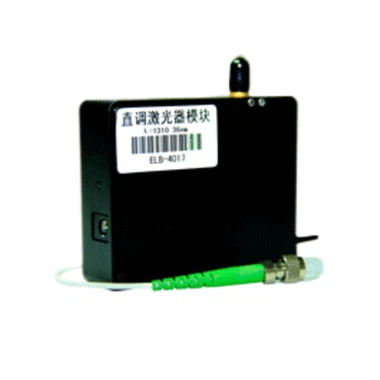
Fiber Optic Active Connector: Application & Purpose
May 20, 2025
A Fiber Optic Active Connector is used where a traditional (passive) fiber connection is not sufficient to maintain signal quality, data speed, or system intelligence. Unlike passive connectors, active connectors incorporate electronics such as lasers, photodiodes, amplifiers, or media converters to perform signal processing functions.
PURPOSE
The core purposes of an active fiber optic connector include:
| Purpose | Description |
|---|---|
| Signal Conversion | Convert electrical-to-optical (E/O) or optical-to-electrical (O/E) |
| Signal Conditioning | Compensate for signal loss, jitter, or dispersion over distance |
| Miniaturized Transceivers | Integrate fiber coupling and optics/electronics into compact interfaces |
| Embedded Diagnostics | Monitor link health (power levels, temperature, faults) |
| Simplified Integration | Plug-and-play optical links with built-in intelligence |
| Reduced EMI & Crosstalk | Convert to optical domain close to noisy systems |
TYPICAL APPLICATIONS
1. Data Centers
Active Optical Cables (AOC) with embedded optics in the connector.
Used to link switches, servers, and storage across racks (10G–800G).
High bandwidth over 10–100 meters, replacing bulky copper cables.
2. Telecommunications
Integrated with SFP/QSFP transceivers in base stations or ODNs.
Supports high-speed signal transmission with fault detection.
Used in front-haul/back-haul networks for 5G or GPON/NG-PON2.
3. FTTx (Fiber to the X)
Active connectors at ONU/ONT endpoints or Customer Premises Equipment (CPE).
Smart termination with monitoring, optical/electrical conversion, and diagnostics.
4. Industrial Fiber Networks
In automation systems, where active connectors provide ruggedized, monitored links.
Used in robotics, oilfield instrumentation, or high-voltage substations.
5. Military & Aerospace
Active fiber interconnects for harsh environments (aircraft, naval, UAV).
Small form factor, with EMI shielding and battlefield-grade reliability.
Includes built-in optical encryption or dynamic reconfiguration.
6. Medical Equipment
High-resolution image transmission (e.g., endoscopy) using active optical links.
Safe isolation of patient-side from electronics (via fiber and opto-isolation).
7. Test & Measurement
Active connectors in OTDR probes, optical power meters, and sensors.
Real-time optical signal test functionality at the connector end.
EXAMPLE USE CASE: Active Optical Cable (AOC)
Structure: Connector housing includes laser driver, laser diode, photodiode, and receiver IC.
Application: 100G QSFP28 AOC between Top-of-Rack switch and server.
Advantage: Light weight, low power, high-speed transmission over 30–100m.
BENEFITS
| Feature | Advantage |
|---|---|
| Integrated electronics | Eliminates need for external transceivers |
| Plug-and-play | No fusion splicing or precise alignment needed |
| Diagnostics & telemetry | Supports network monitoring and predictive maintenance |
| Long reach & high bandwidth | Maintains data integrity over 100+ meters |